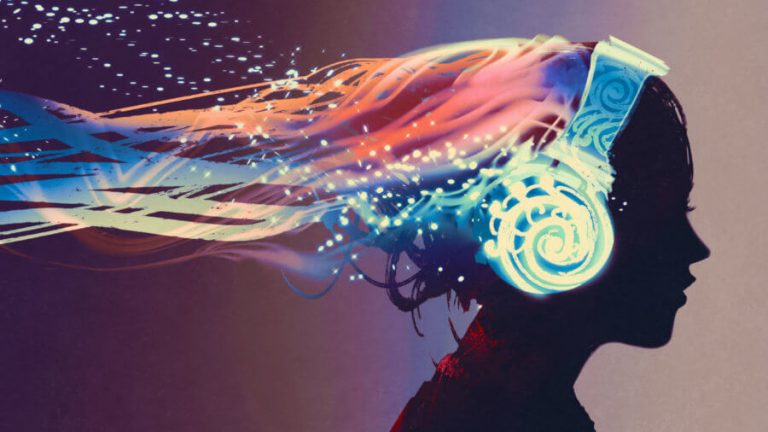
Music has become a significant aspect of everyday life, it is no longer a commodity that members of the upper class used to be the only ones to enjoy. People have access to music 24/7 through various apps and platforms to listen to at point: driving the car, travelling on public transport, studying, drawing, painting, cleaning, working, writing…
I am not stranger to using music to fill the neverending void of silence when completing tasks, cleaning, writing and when I was student, studying. Even now I am listening to music as I am typing this (Dark Aria (Solo Levelling) – Instrumental by David Eman and Pandora Journey). I personally feel like different types of music result in different end products, especially when it comes to my writing. Upbeat music tend to lean more towards happier moments in my writing, intense instrumentals help fill out fighting scenes, heartfelt songs provides more emotion and character analysis within scenes. Writer Sophie Lark, in her book Grimstone (which I read this year, and very much enjoyed) she states that music plays a significant role in her creative writing process:
“Music is a big part of my writing process. If you start a song when you see a [music note] while reading, the song matches the scene like a movie score.”
– Sophie Lark, Grimstone
Lark even goes the next step and assigns a song to a specific chapter, which I had taken to running through spotify as I read the chapter and it just opens your mind completely to what’s happening in the story. There have been some published literature exploring the impact of music on the brain’s cognitive processes, linking it to the individual’s ability to process trauma, to becoming a more effective leader and improving one’s ability to being more productive by enhancing their creative ability. Aidan Kang and Aliso Viejo stated that music has the potential to enhance our ability to think freely and explore possibilities, suggesting that listening to music opens our minds to thoughts and ideas that wouldn’t always present themelves in zones of silence or everyday noise.
“One participant vividly described, “The presence of music while I was engrossed in writing my book served as a powerful muse, helping me conjure vivid imagery and craft intricate narratives.””
– A. Kang & A. Viejo, Creative Problem-Solving and Music: Analyzing the Correlation between Music and Divergent Thinking Abilities (2023)
Their study indicated that music also plays a role in the creative imagination of an individual, allowing individuals to imagine scenes in their minds with specific details such as the climate of a landscape, or the sensations of knitted wool against skin or the sounds of a train carriage during peak hour. Not saying that the creative and imaginative power of music is suited only to writing, it is employed by many different creative styles such as painting, drawing, sculpture, web design and photography. As well as people who simply play to fill the empty silence while they are occupying themselves. I have also noticed some books are even providing playlists to accompany their reader’s journey through their novels, examples include Veronica Eden’s Hell Gate (which was my first discovery of playlists in novels) and H.D. Carlton’s Haunting Adeline, which definitely enhanced the reading of Carlton’s novel with very dark gothic vibes that suited the narrative beyond words.
The few articles I have read so far in the interest of this post have suggested the same thing: music is a catalyst for imagination, creativity and productivity as well as informing the healing process for traumatic experiences. Music is a powerful thing and I am very grateful for the artists who provide these amazing pieces, both classical and contemporary.
Green Mage
Bibliography:
- Adams, B. G. (2009). Coping with traumatic experiences: An analysis of the health benefits of combining music listening with the expressive writing paradigm (Order No. 3386109). Available from ProQuest Central. (304864998). Retrieved from http://ezproxy.sl.nsw.gov.au/login?url=https://www.proquest.com/dissertations-theses/coping-with-traumatic-experiences-analysis-health/docview/304864998/se-2
- Kang, A. (2023). Creative Problem-Solving and Music: Analyzing the Correlation between Music and Divergent Thinking Abilities. Journal of Behavioral and Brain Science, 13(11), 199-205.
- Listening to “happy music” may lead to more creative mind: Study. (2017, Sep 06). Xinhua News Agency – CEIS Retrieved from http://ezproxy.sl.nsw.gov.au/login?url=https://www.proquest.com/wire-feeds/listening-happy-music-may-lead-more-creative-mind/docview/1936212605/se-2
- Pogacnik, M. (2007, July 16). Discovering creativity through music, listening and freedom. Nation’s Cities Weekly, 30(28), 5+. https://link-gale-com.ezproxy.sl.nsw.gov.au/apps/doc/A166778341/AONE?u=slnsw_public&sid=bookmark-AONE&xid=f80c0c2e
 Green Mage Writings