
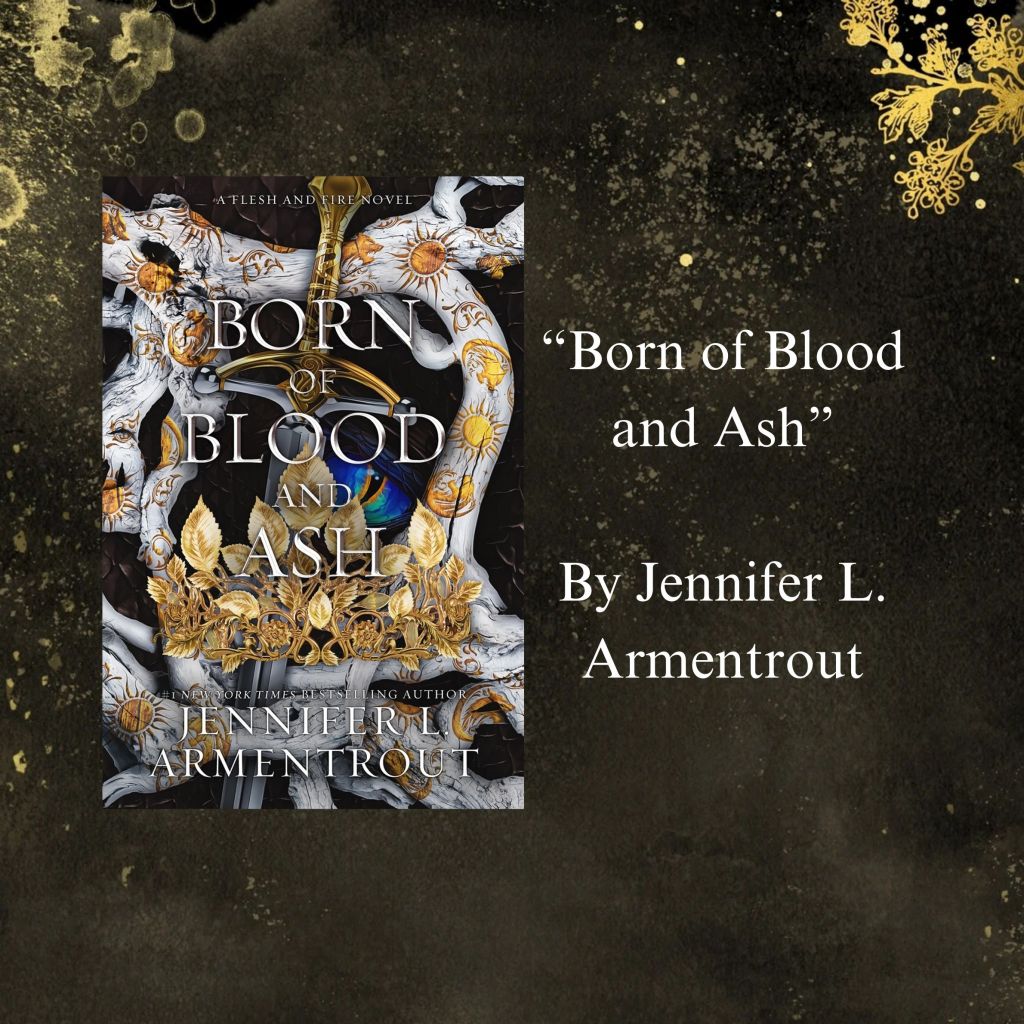
I have finally finished the last instalment of the Fire and Flesh series by Jennifer L. Armentrout, “Born of Blood and Ash”. I’m not going to lie, out of all the books in both this series and the Blood and Ash series, this one was the hardest for me to read. I started it in November 2024, and I am sad to say that it did not grab me the same way the other books did and I hit a slump HARD.
First off, if you continue to read this but have not read this book for yourself, there are some spoilers in this post. You have been warned!
What I love about JLA’s books in this series is that the next book pretty much picks up exactly where the last one finishes, with the exception of a couple, but the point is that not much time has passed between each book. So, this one carries on from the last book which ended with Sera being free of Kolis and blasting his so badly that he went into stasis and Ash is saved from his imprisonment. Now, based on the other books, you would expect that they don’t spend too much time celebrating their regained freedom and that Sera is in fact the true Queen of the gods as Ash had ascended her despite the extreme risk of destroying the realms, but go straight into defence and attack modes, preparing for the inevitable battle with Kolis once Sera had awakened from her ascension.
This did not happen. Yes Sera awakens, yes she is viewed (by most) as the true Primal of Life and Queen of the realms, yes she and Ash get it on (a lot) through the book, but there is one singular theme that carries on throughout the whole book that I did not expect. Sera’s trauma from her imprisonment by Kolis.
Now, admittedly it’s been a while since I read the last book and I couldn’t remember all of the finer details of what happened to Sera during her imprisonment, so I couldn’t fully wrap my head around why JLA would focus so much on it rather than the fighting and becoming the true Primal of Life. There have been so many books where the character who had suffered trauma finds a way to move past it and redirect focus back to the main storyline and action, and I suppose that was what I was expecting. I did not expect Sera’s trauma to be the main storyline rather than her fight against Kolis, and so I suppose I got a bit frustrated with it. That being said, I eventually started making some progress and that was when the finer details of her imprisonment were recapped, and then Sera’s trauma response began to make more sense. While I loved SJM’s recovery story for Nesta in A Court of Silver Flames, and how she recovered from her own trauma and making amends for what she did as a response to that trauma, JLA’s storytelling of Sera’s trauma response and recovery not only covered her imprisonment, but her entire life, and it was completely relatable and just so… real.
Anyone who has experienced abuse and/or assault, or knows someone who has, knows that there are many different ways that a person can respond to that trauma. Sera resorted to telling herself that it could have been worse, that others had suffered worse, that so much more could have been taken from her than what had been. She moves through this denial right up until Ash explodes and she suffers a panic attack, twice, which resulted in her turning into her notam (animal form) and she ran. Seeking freedom from the trauma, and to escape from the fact that she had to face it in order for Ash to help her. Anyone who has been in a remotely similar situation knows what it means to seek escape from it, but the truth is that you never really can.
This book not only addressed how Kolis ended up locked away, how Sera was forgotten as the True Primal of Life, how Poppy ended up in the situation she’s in and it even covers Sotoria’s story. It goes through the motions of what it means to be in a situation where you are trapped, helpless and the aftermath of finally escaping that prison, only to be trapped in another within your own mind. JLA highlighted the fear and anxiety that comes from such a trauma, as well as the strength and the courage it takes to try and move your life on from it. It’s not easy, it’s terrifying and suffocating, and doesn’t just go away. It takes never-ending strength and determination to face the reality of it everyday and still try to find the goodness in life, even if some days it seems impossible.
The end of the book is a bitter-sweet one, Sera and Ash find their happiness while knowing that the future still faces the last of prophecy. They prepare the best they can for the future war that is no longer avoidable (we know this), but still continue to find and hold on to the happiness in their lives. While I struggled with this book at first, in the end it really struck a chord with me, and I found myself truly invested in Sera’s healing as a traumatised woman rather than the protagonist of the story.
I sincerely hope that anyone who has experienced something similar to Sera (and all other characters in this series that suffered similar fates), also continues to find that happiness in their lives. If you’re not up to that part yet, please keep fighting to find it, you deserve it because you truly did not deserve the trauma that plagues you.
 Green Mage Writings